Test Pages

Sunday, October 21, 2007

SAP to Kanye West "There's Only One of Me"

SAP is a Goliath of Epic Proportions. SAP is The Man. SAP is King. Basically, it's SAP's world, and the rest of are just living in it.


So says an article in PC World. Writes author, Thomas Wailgum, if you're wondering just how big SAP is becoming, IDC's Albert Pang has this nugget for you: "The recent rise of SAP as the leading enterprise applications vendor across multiple customer and product categories has created a booming economy whereby an increasing number of developers and resellers are jockeying for the attention of the market leader and its installed base of more than 41,000 customers," he wrote in a recent IDC report.


Is that over the top? Hardly. "We have read more ...

Business Analyst Tool

I found an interesting post on a Business Analyst blog. The blogger attended a Certified ScrumMaster training class delivered by Lithespeed.  He noted that the class was very valuable, and went on to share a tool, trade-off matrix, to help set customer and team expectations.    Go to the Business-Analyst-Blogblog to view the matrix.

By documenting items this way at the beginning of a project, the project sponsor and all project stakeholders (including project team members) have a clear view of what project success looks like.  In the example success is implementing all features, within a budget close to $500k and somewhere within 3-6 months.  In addition the sponsor is OK with 2 large bugs a month. 


Comments (4)

Filed under: General, BA Tips, Requirements — Kupe @ 9:00 am

Monday, February 12, 2007

If KOH in alcohol is used, the first elimination is much faster than the second, so the bromoalkene may be isolated if desired.

C6H5CH=CBrC6H5 + KOH ——> C6H5C≡CC6H5 + KBr + H2O

The reaction of 1-butene with bromine would give 1,2-dibromobutane, and on treatment with base this vicinal dibromide would be expected to yield 1-bromo-1-butene followed by a second elimination to 1-butyne.

CH3CH2CH=CH2 + Br2 ——> CH3CH2CHBr–CH2Br + base ——> CH3CH2CH=CHBr + base ——> CH3CH2C≡CH

In practice this strategy works, but it requires care in the selection of the base and solvent. If KOH in alcohol is used, the first elimination is much faster than the second, so the bromoalkene may be isolated if desired. Under more extreme conditions the second elimination takes place, but isomerization of the triple bond also occurs, with the more stable isomer (2-butyne) being formed along with 1-butyne, even becoming the chief product. To facilitate the second elimination and avoid isomerization the very strong base sodium amide, NaNH2, may be used. Since ammonia is a much weaker acid than water (by a factor of 1018), its conjugate base is proportionally stronger than hydroxide anion (the conjugate base of water), and the elimination of HBr from the bromoalkene may be conducted at relatively low temperature. Also, the acidity of the sp-hybridized C-H bond of the terminal alkyne traps the initially formed 1-butyne in the form of its sodium salt.

CH3CH2C≡CH + NaNH2 ——> CH3CH2C≡C:(–) Na(+) + NH3

An additional complication of this procedure is that the 1-bromo-1-butene product of the first elimination (see previous equations) is accompanied by its 2-bromo-1-butene isomer, CH3CH2CBr=CH2, and elimination of HBr from this bromoalkene not only gives 1-butyne (base attack at C-1) but also 1,2-butadiene, CH3CH=C=CH2, by base attack at C-3. Dienes of this kind, in which the central carbon is sp-hybridized, are called allenes and are said to have cumulated double bonds. They are usually less stable than their alkyne isomers.In each case two conformers are drawn within parentheses, and the anti-relationship of selected vicinal groups in each is colored green. The reaction proceeding to the left is a dehydrohalogenation induced by treatment with KOH in alcohol. Since this is a stereospecific elimination, each diastereomer gives a different stereoisomeric product. The reaction to the right is a dehalogenation (the reverse of halogen addition to an alkene), caused by treatment with iodide anion. Zinc dust effects the same reaction, but with a lower degree of stereospecificity. The mechanism of the iodide anion reaction is shown by red arrows in the top example. A similar mechanism explains the comparable elimination of the racemic isomer. In both reactions an anti-transition state is observed.

The two stereoisomers of 1-bromo-1,2-diphenylethene (shown on the left of the diagram) undergo a second dehydrobromination reaction on more vigorous treatment with base, as shown in the following equation. This elimination generates the same alkyne (carbon-carbon triple bond) from each of the bromo-alkenes. Interestingly, the (Z)-isomer (lower structure) eliminates more rapidly than the (E)-isomer (upper structure), again showing a preference for anti-orientation of eliminating groups.

Sunday, December 17, 2006

Announcing The Science to Achieve Results (STAR) Program 2007 Research Grants

Numerous grants and graduate fellowships in various environmental science and engineering disciplines can be obtained via a competitive bid process and independent peer review.

The program engages the nation’s best scientists and engineers in targeted research that complements EPA’s own outstanding intramural research program and those of our partners in other federal agencies. In addition, through this same competitive process, NCER periodically establishes large research centers in specific areas of national concern. At present, these centers focus on children’s health, hazardous substances, particulate matter, and estuarine and coastal monitoring.

PARTIAL LIST

* Issues in Tribal Environmental Research and Health Promotion: Novel Approaches for Assessing and Managing Cumulative Risks and Impacts of Global Climate Change - Open: September 25, 2006 - Closing: January 23, 2007

* Sources and Atmospheric Formation of Organic Particulate Matter - Open: November 20, 2006 - Closing: February 27, 2007

* An Interdisciplinary Approach To Examining The Links Between Social Stressors, Biodiversity And Human Health - Open: December 15, 2006 - Closing: April 19, 2007

* Computational Toxicology Centers: Development Of Predictive Environmental And Biomedical Computer-Based Simulations And Models - Opens: December 2006

* Ecological Impacts from the Interaction of Climate Change, Land Use Change and Invasive Species - Opens: December 2006

* Enhancing Ecosystem Services from Agricultural Lands: Developing Tools for Quantification and Decision Support - Opens: December 2006

* Development and Evaluation of Innovative Approaches for the Quantitative Assessment of Pathogens or Cyanobacteria and their Toxins in Drinking Water - Opens: January 2007.

Read more information.

Tuesday, December 05, 2006


Landing on the Moon is So ... Yesterday


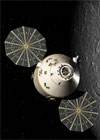
The National Academies website reported today that NASA has announced plans for a solar-powered lunar base in preparation for eventual missions to Mars and beyond.

By 2020, four-person crews will begin to establish a lunar base by bringing power supplies and rovers and building living quarters in a series of seven-day missions. Next, the crews will stay at the lunar base for 180-day missions to get ready for voyages to Mars. Read more.

Sunday, December 03, 2006


Fighting the Terminal Master's Blues


NISHAD H. MAJMUDAR reported in the The Wall Street Journal about the rise of a new science degree: the professional science master's (PSM).

Excerpted from the article:
Twyla Tiongson Pohar expected her bachelor's degree in molecular biology to help launch her career.

But employers told her she needed either a doctorate, requiring years of research, or business experience, which she didn't have, to land her ideal job as a biological information analyst. She turned instead to a newly available alternative: a degree that combines science and business. In 2002, Ms. Tiongson Pohar earned a professional science master's, or PSM, in computational biology from New Jersey Institute of Technology (NJIT) in Newark. She parlayed it into a $55,000-a-year job managing the development of software for researchers at Ohio State University's cancer center.

While Pohar went to NJIT, some 900 students are currently pursuing PSMs at 45 colleges and universities in 17 states, in fields including bioinformatics, biotechnology, financial mathematics and environmental sciences.

PSM-granting schools say the programs will increase the number of students in the sciences, promote greater science literacy in business and government, and reduce the outsourcing of higher-skilled U.S. jobs abroad. But critics, particularly in the Ivy League and other top colleges, say the degree waters down standards in graduate science courses and accentuates textbook learning over independent thought.


Read more.

Sunday, November 05, 2006

PENN CENTER FOR BIOETHICS
Tuesday, November 21, 2006
“Pharmaceutical testing and evidence making:
An ethnography of the globalized clinical trial”
Adriana Petryna, Ph.D.
Associate Professor of Anthropology
University of Pennsylvania

Tuesday, December 12, 2006
“How the success and failure of prenatal care
changed the way we think about pregnancy”
John Lantos, M.D.
Director, Center for Clinical Ethics
University of Chicago

Read more about upcoming events at the Penn Center for Bioethics

Monday, October 30, 2006


OECD Information Technology Outlook 2006

The OECD Information Technology Outlook 2006 analyses the development and impact of the changing global distribution of services activities and the rise of China and India as significant suppliers of ICT-related goods and services. ICT skills across the economy are also examined to provide insights into the dynamics of job creation and international sourcing.

The 2006 edition also looks at the increasing importance of digital content in selected industries and how it is transforming value chains and business models. The potential of technological developments is examined: ubiquitous networks, location-based services, natural disaster warning systems, the participative web and the convergence of information technology with nanotechnology and biotechnology.

Finally, this volume analyses changes in IT policies in OECD countries and the emergence of new priorities to meet new challenges.

Access to the underlying Excel spreadsheets used to create the tables and graphs is available from both the printed and electronic editions via the StatLinks provided on each page.

Publication of the OECD Information Technology Outlook alternates every year with the OECD Communications Outlook (latest edition published in August 2005).

National information technology policy profiles are available on the OECD Information Economy Web site at www.oecd.org/sti/information-economy.
The Global Networking Symposium on BioEnergy
November 9 - 10, 2006
Alberta, Canada

This alternative energy conference takes a business-oriented look at the opportunities and challenges surrounding biofuels. Participants will discover:

Who is investing in renewable energy and how do traditional investors view this investment opportunity? Where is the smart money going?

What percentage of the total world arable land should be used to produce renewable energy crops?

What crops and plant life worldwide have the greatest potential to be competitive in the global renewable fuel market?

How to get consumers to buy in to renewable energy strategies that at times

Friday, October 27, 2006

Sermo Partners with Penn Center for Bioethics to Develop Ethical Guidelines for Market-Based Clinical Informatics

Sermo, the fastest growing online community created by physicians for physicians, has announced a partnership with Arthur Caplan, Ph. D., and the University of Pennsylvania's Center for Bioethics, to expand the development of ethical guidelines for Sermo and Sermo's users. Dr. Caplan is the Founding Director of the Center for Bioethics, as well as an author or editor of twenty-five books and over 500 papers in referenced journals of medicine, science, philosophy, bioethics and health policy. Dr. Caplan and the Bioethics Center will also work with Sermo to build an ethics council, overseeing Sermo's efforts on an ongoing basis as it establishes a new field of clinical informatics. Read more at Genetic Engineering News.

Monday, October 23, 2006

Homeroom: How Major Museums and Science Centers Ignite Student Interest in Research

As budgets tighten and both informal science venues and academic researchers compete for limited dollars, the challenge is to develop collaborations that sustain and stimulate ideas at the nexus of research, education, and outreach.

Such partnerships are already underway in major museums and science centers around the United States. Two weeks ago here in Philadelphia, the school district and its partner, the Franklin Institute, officially marked the opening of the Science Leadership Academy, a new magnet high school, with a ribbon cutting ceremony and program on September 28, 2006, at 10 a.m.

This special admission school offers students a college preparatory curriculum with a focus on science, technology, mathematics and entrepreneurship. Students learn in a project-based environment where the core values of inquiry, research, collaboration, presentation and reflection are emphasized in all classes.

The American Museum of Natural History (AMNH) in New York is not partnered with any one high school but there are several programs to engage the scientific interests of students and the public city-wide. One program in particular, the High School Science Research Program (HSSRP), was developed as a practicum for New York City students interested in pursuing a career in science. In the program HSSRP uses graduate students to ...

 Test